Cardines Field Restoration
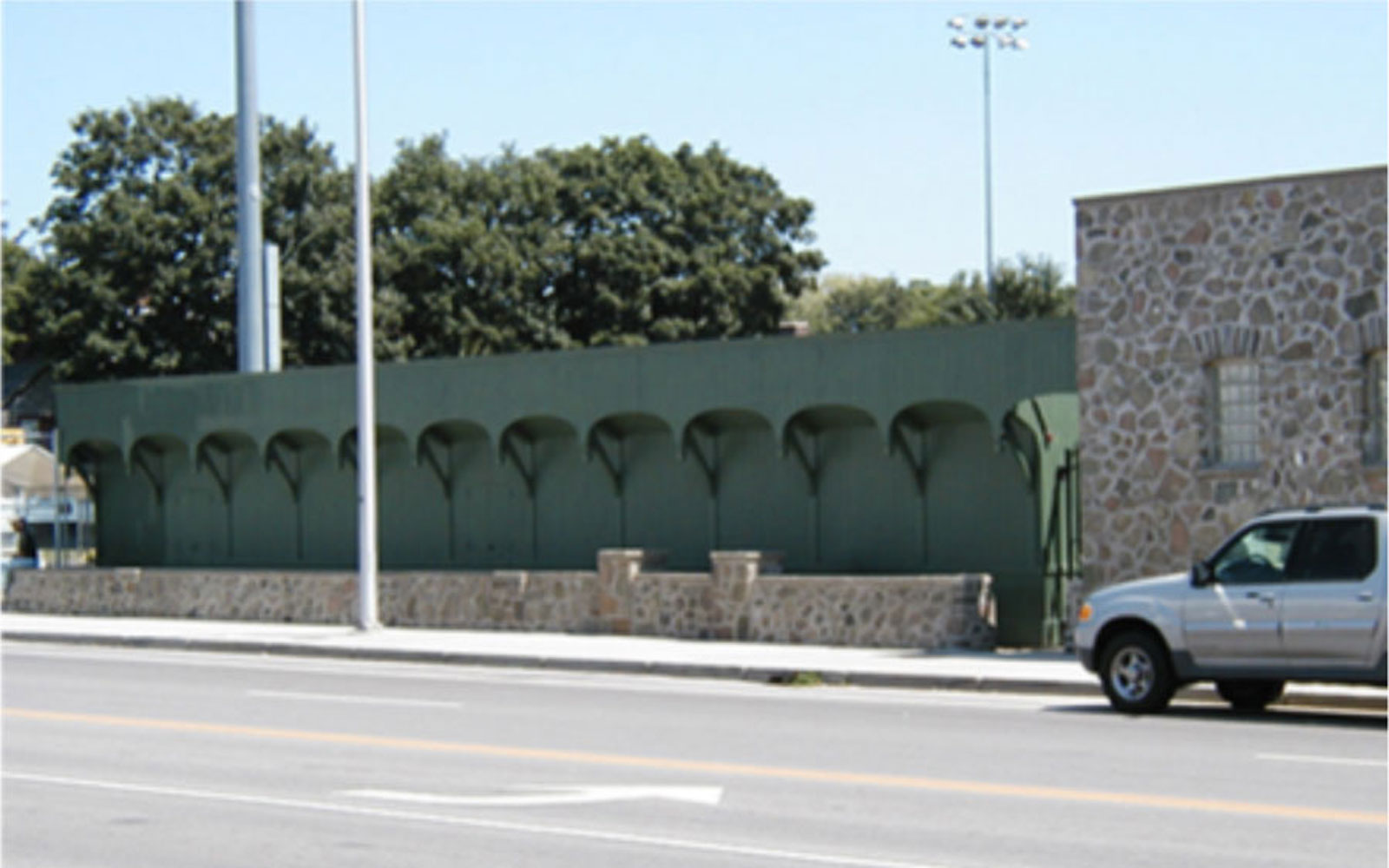
Building 5: 3rd Base Bleachers (view from America's Cup Avenue) - 2005
The Restoration of Cardines Field in Newport, a National Register property, is the oldest surviving ballpark in North America dating back to an 1893 to 1898 time period. The Master Plan developed by Mr. Staats led directly to the City of Newport receiving $250,000 from the Recreational Bond Fund of the RIDEM. The founder and President of The Friends of Cardines, Mr. Staats’ grantsmanship led to grants totaling $93,000 for the restoration of Building 5, the 3rd Base Wooden Bleachers (2005), using students from the School of Architecture, Art & Historic Preservation at Roger Williams University.
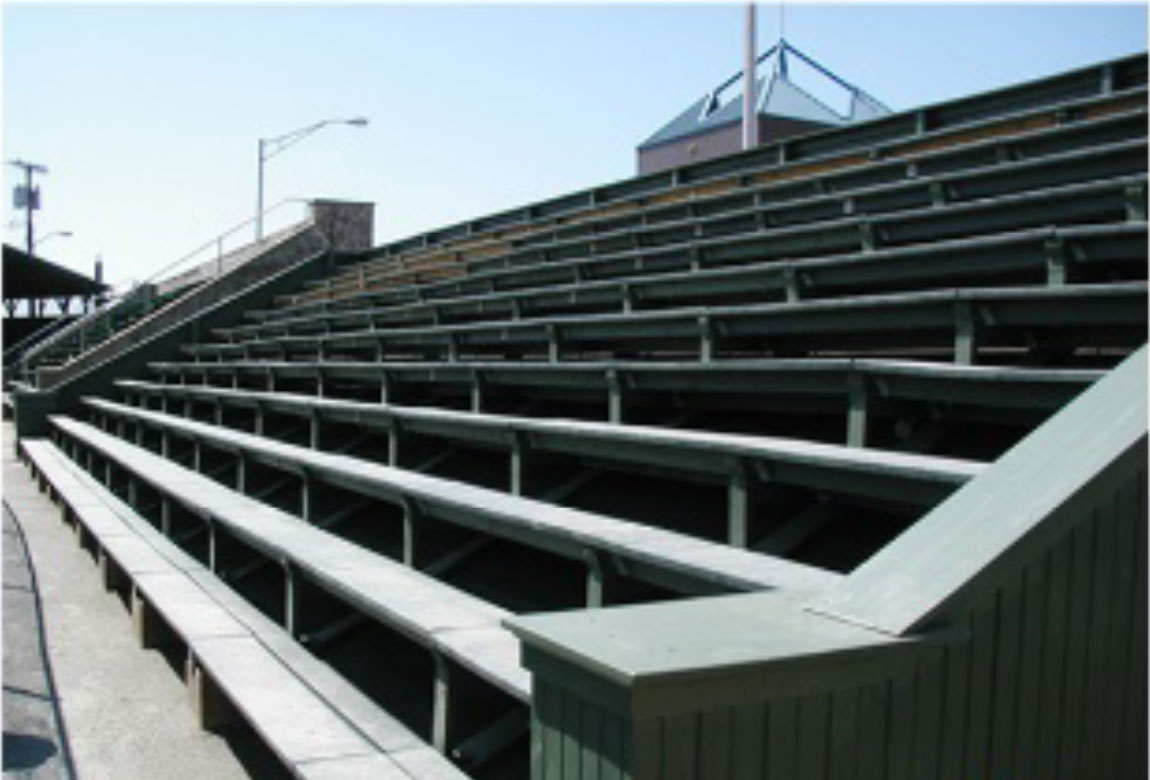
Building 5: 3rd Base Bleachers (view from inside field) - 2005
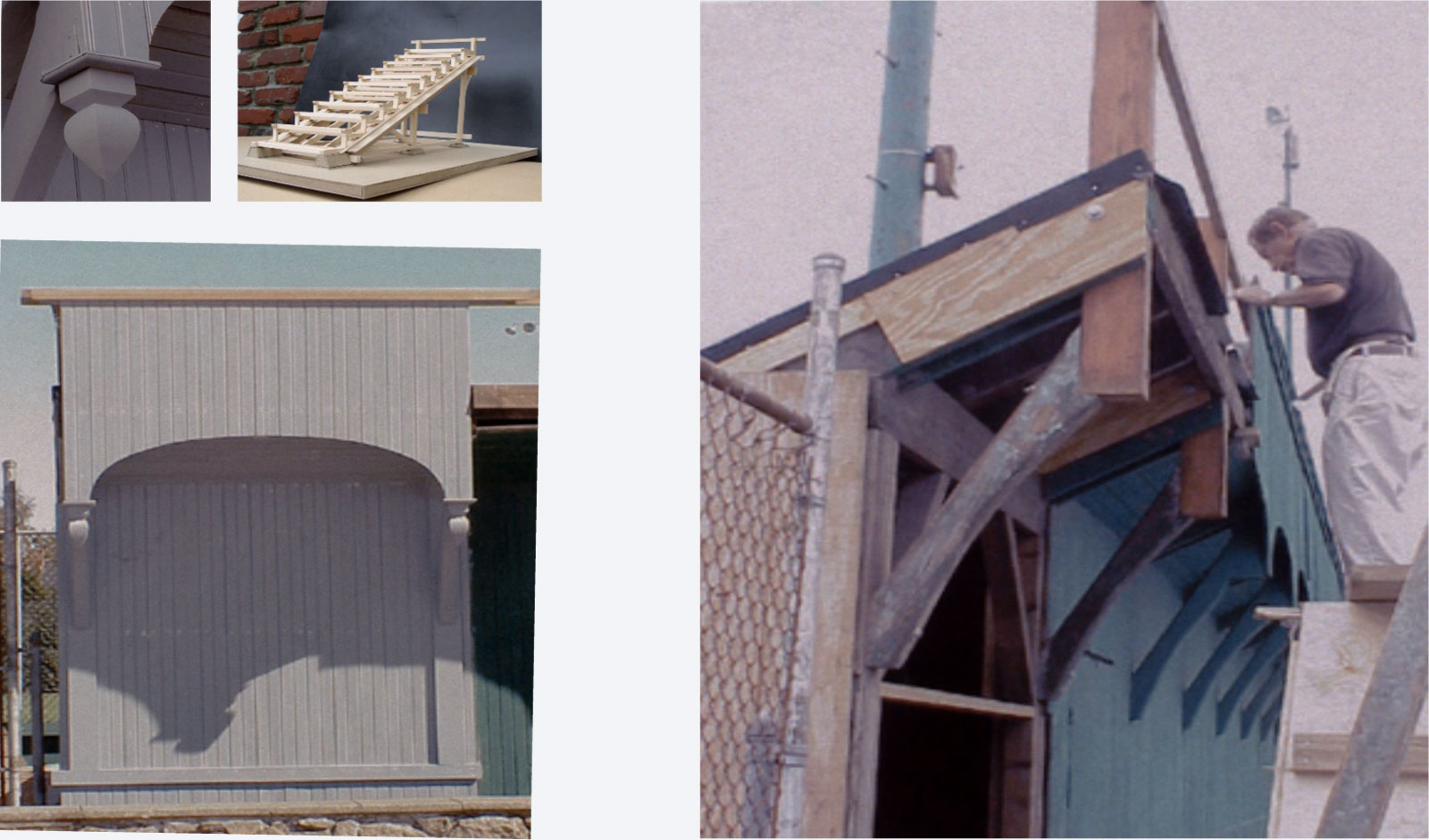
Building 5: 3rd Base Bleachers - constructiong a restoration "mock up." Top Left: Finial detail and model built as a guide for restoration. Bottom Left: Restoration in progress of the first bay at the northwest end of the bleachers. Right: Master carpenter Grayson Murphy restored the north end of the bleachers in 1998 to test techniques designed by the architect.
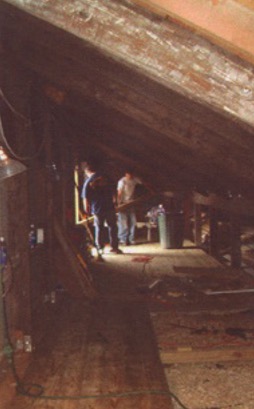
Building 5: Interior view showing new 2 inch tongue and goove flooring and restored rafters.
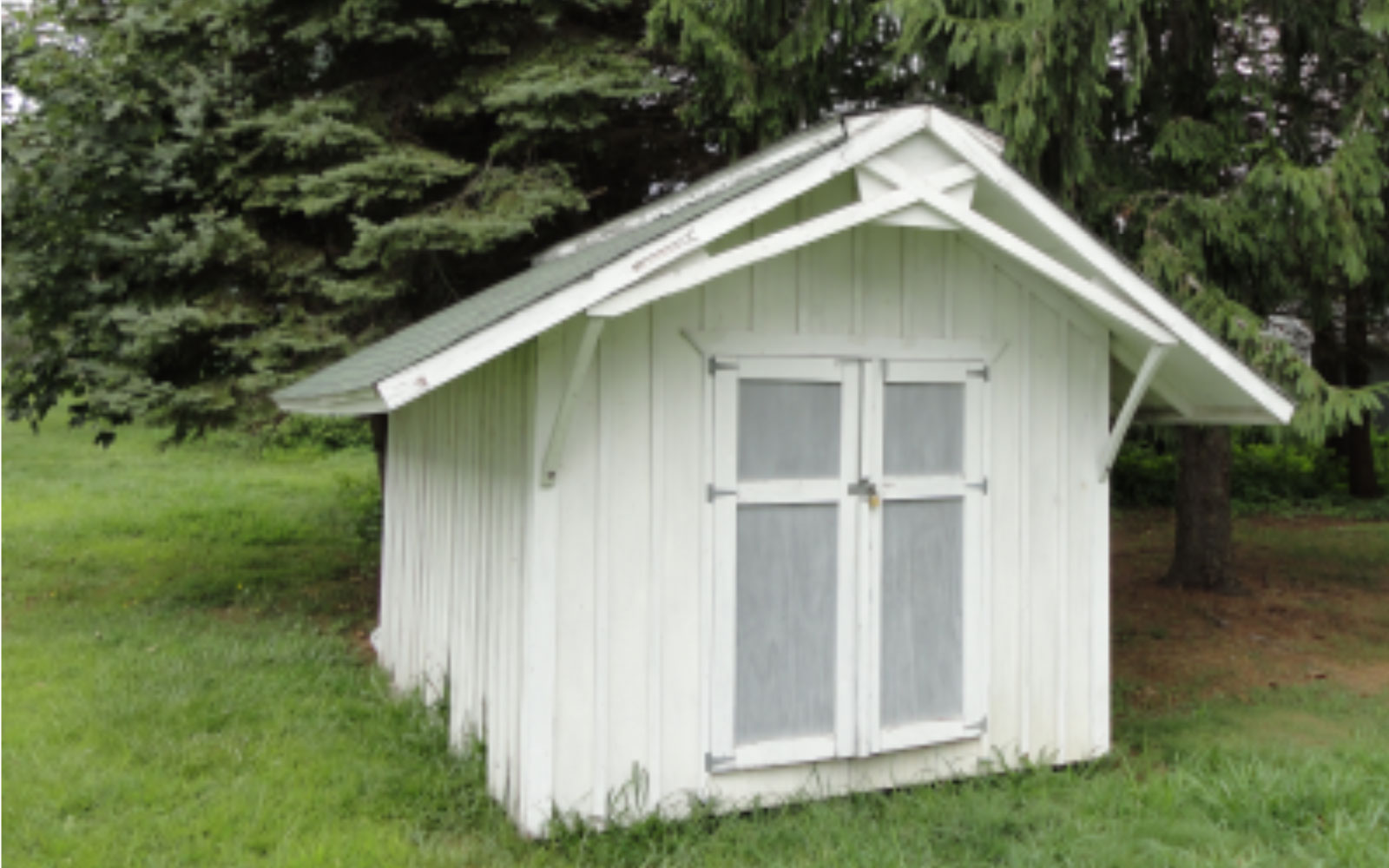
Cardines Field storage shed designed and built bu students - 2003
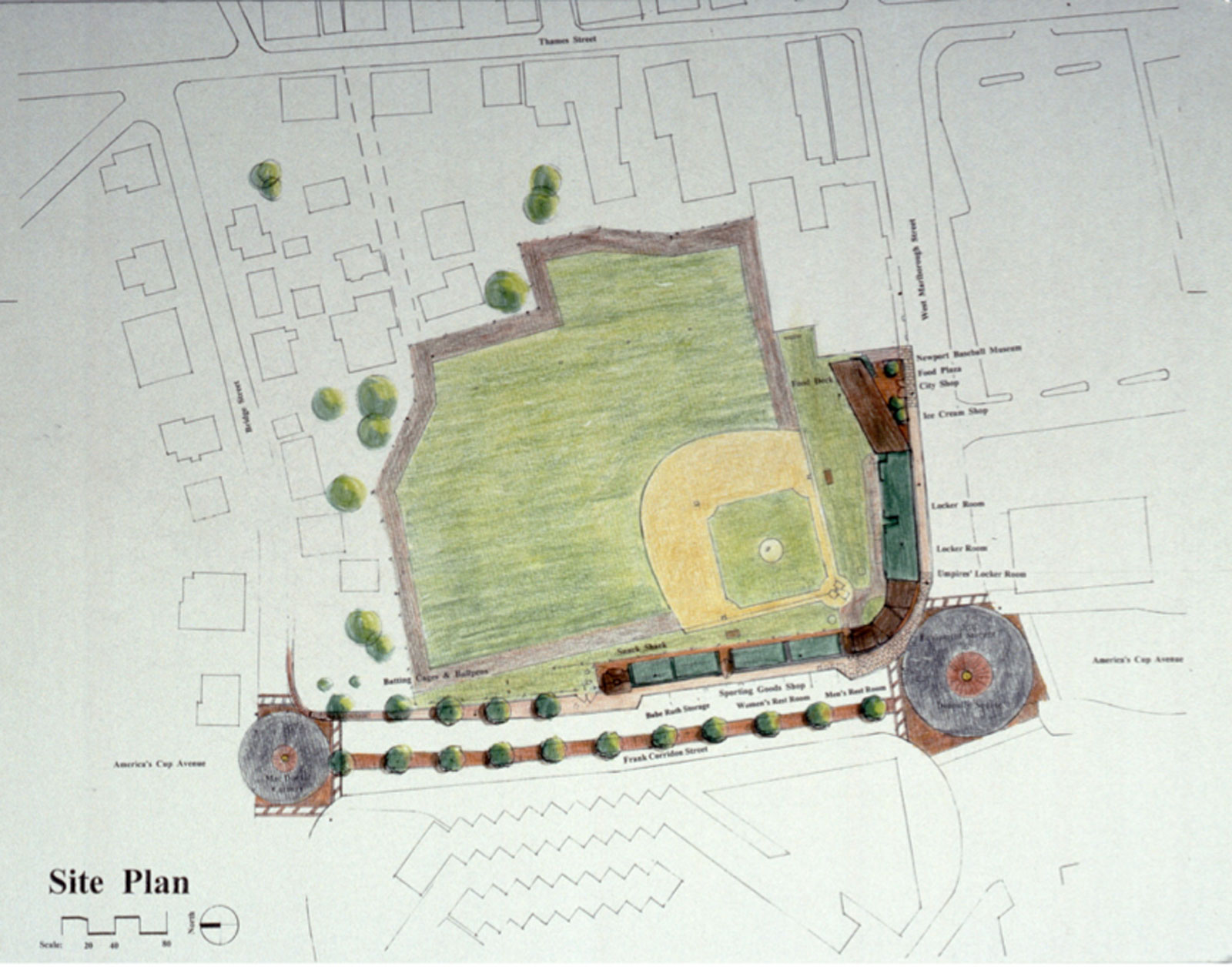
Master plan for entire ballpark - 1998 (Drawing by J.L. Staat)
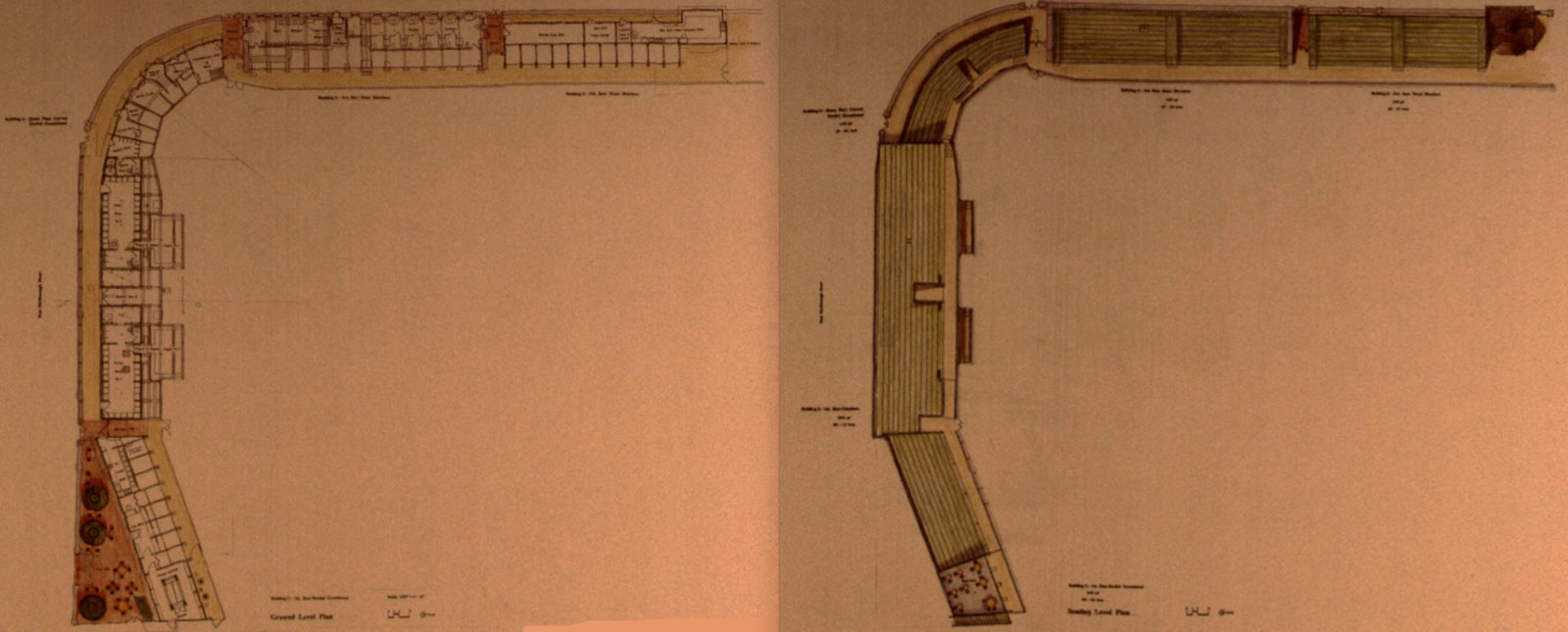
Left: Master Plan - ground level plan for entire ballpark - 1998. Right: Master Plan - seating level plan for entire ballpark - 1998 (Drawing by J.L. Staat)
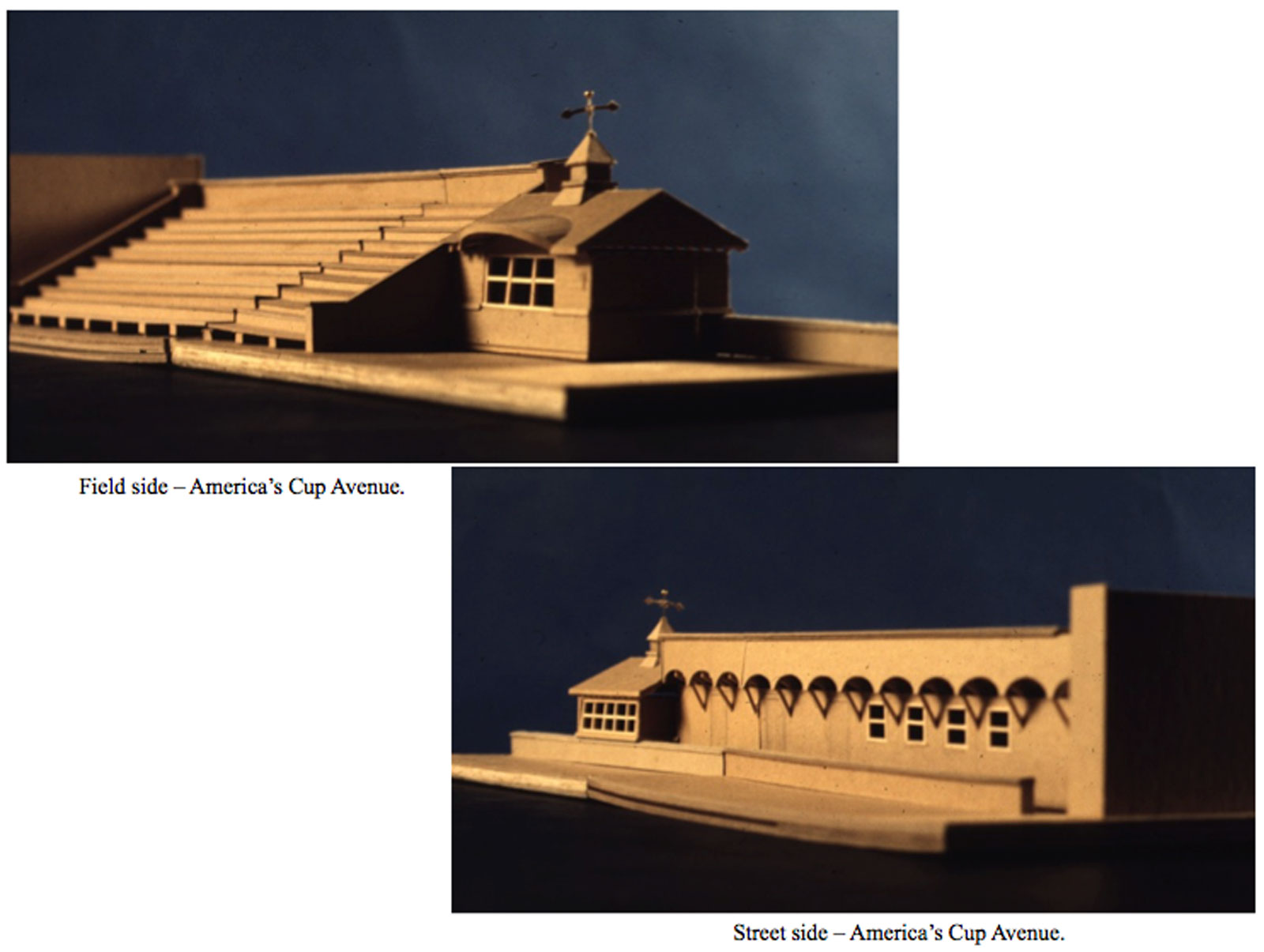
Model of restored bulding 5. 3rd Base Bleachers Note: Refreshment stand was not built. (Model by Stefanie Balzotti - RWU 2008)
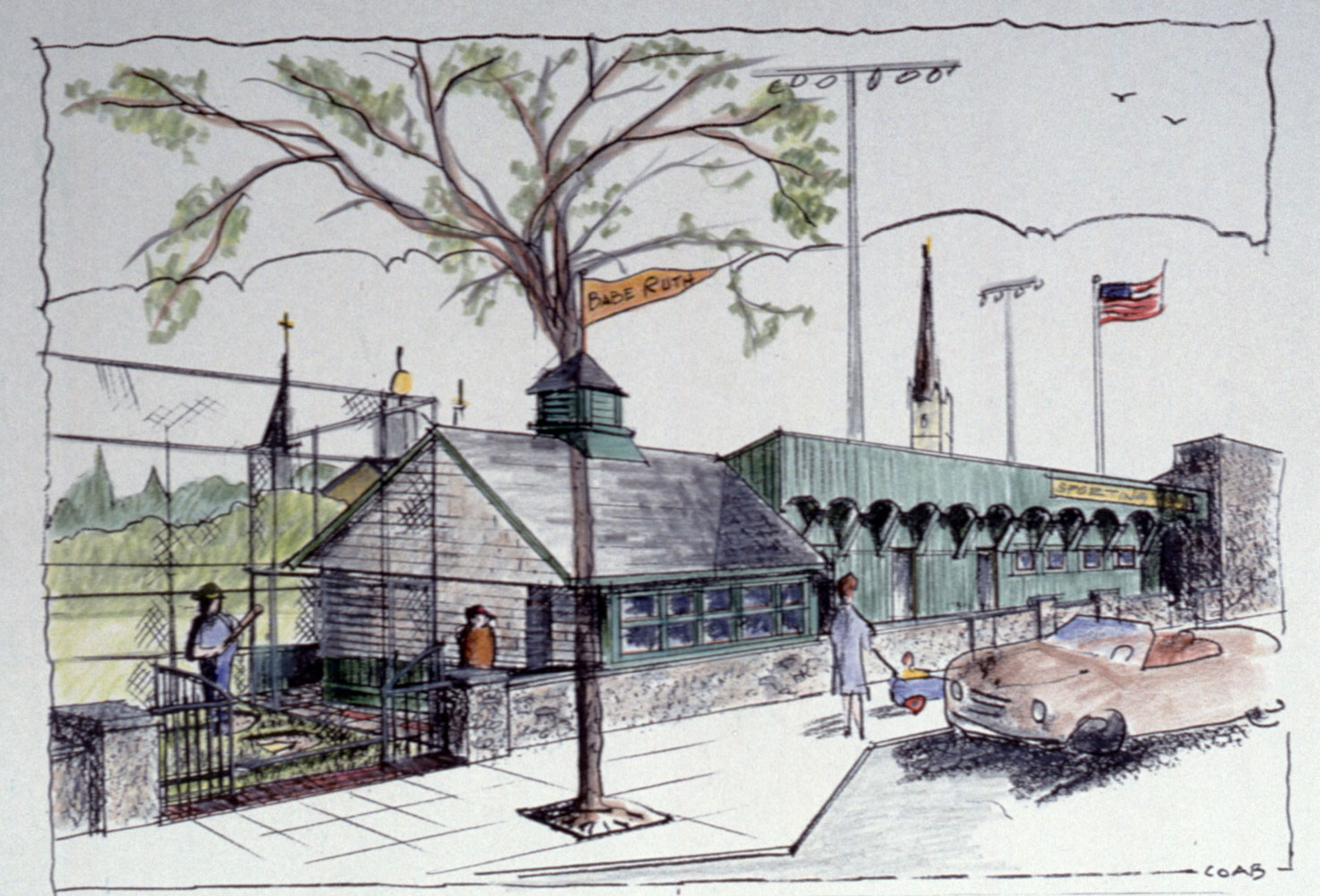
Master Plan - view from across America's Cup Avenue to bulding 5. 3rd Base Bleachers - 1998 (Drawing by Carla A. O. Bosch)
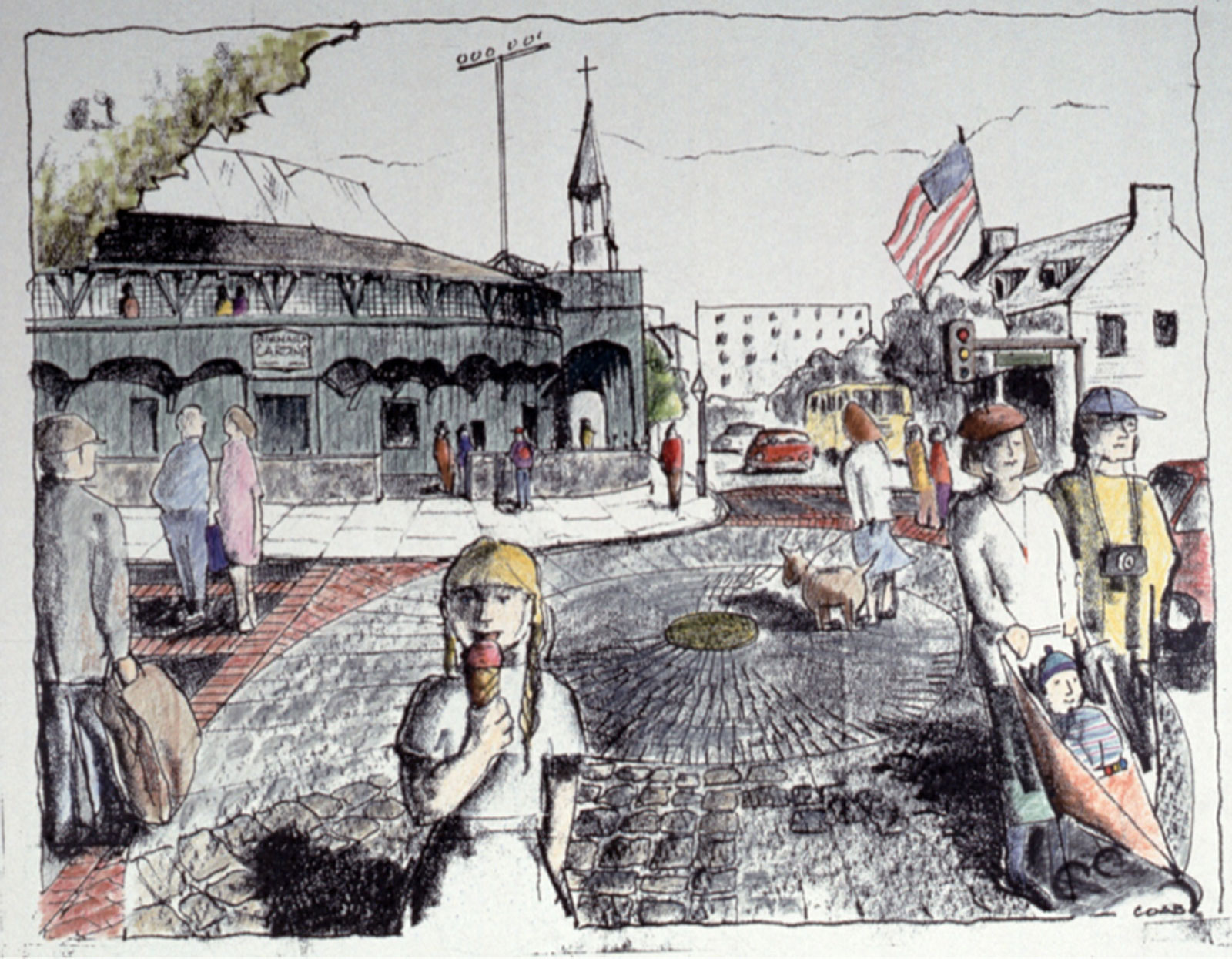
Master Plan - view looking across America's Cup Avenue and Marlborough Street to bulding 3. The home plate curve roof grandstand - 1998 (Drawing by Carla A. O. Bosch)
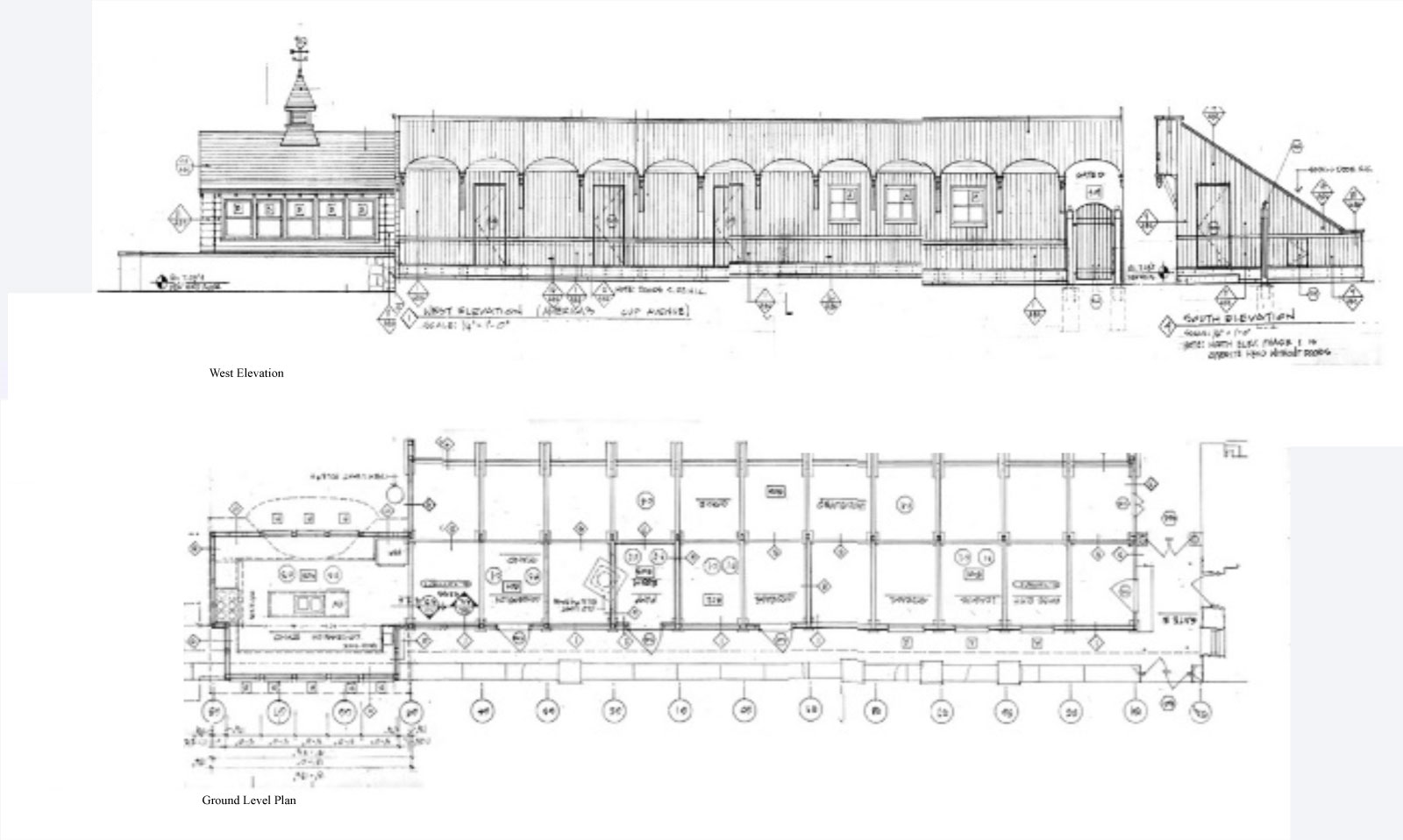
Construction drawing - bulding 5. 3rd Base Bleachers (Drawing by J.L. Staats)
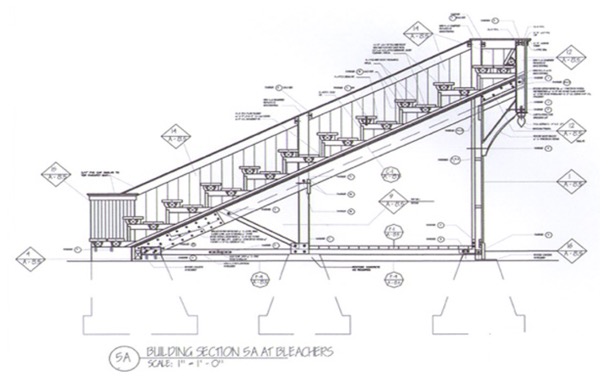
Construction drawing - bulding 5. 3rd Base Bleachers (Drawing by Angela Holm, Assoc., AIA, LEED Certified)
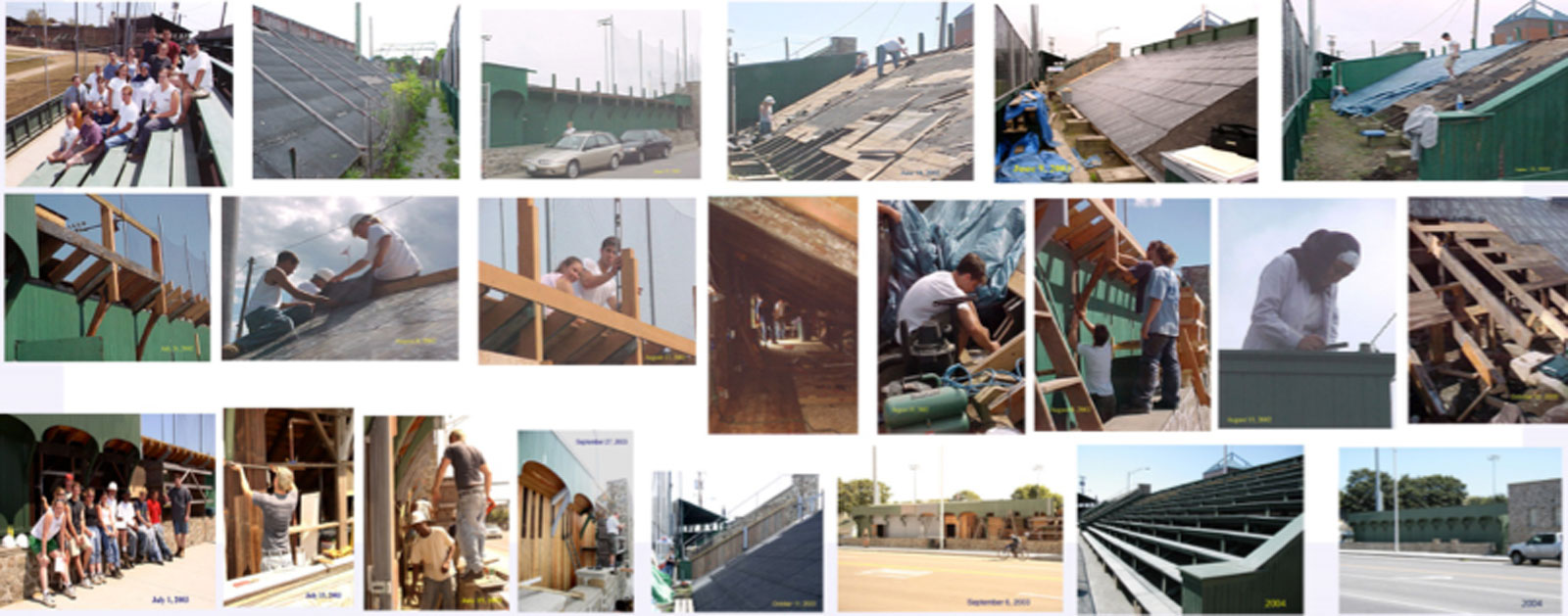
Two summers work by two classes of 23 students and a professor from the School of Architecture at Roger Williams University. In addition a project manager, two carpentry consultants and more than 5,400 hours of work to get the project to completion in June of 2005.