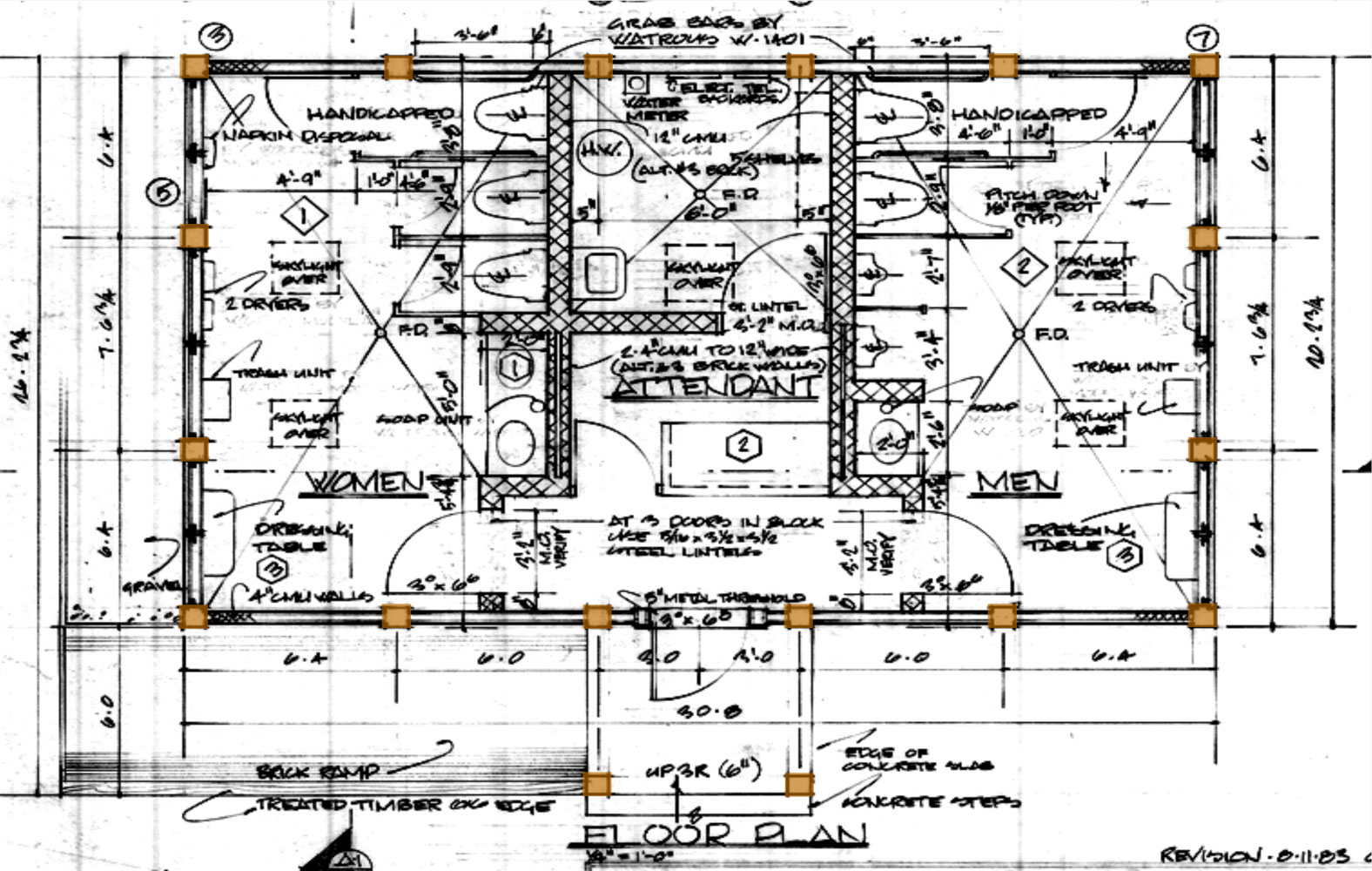
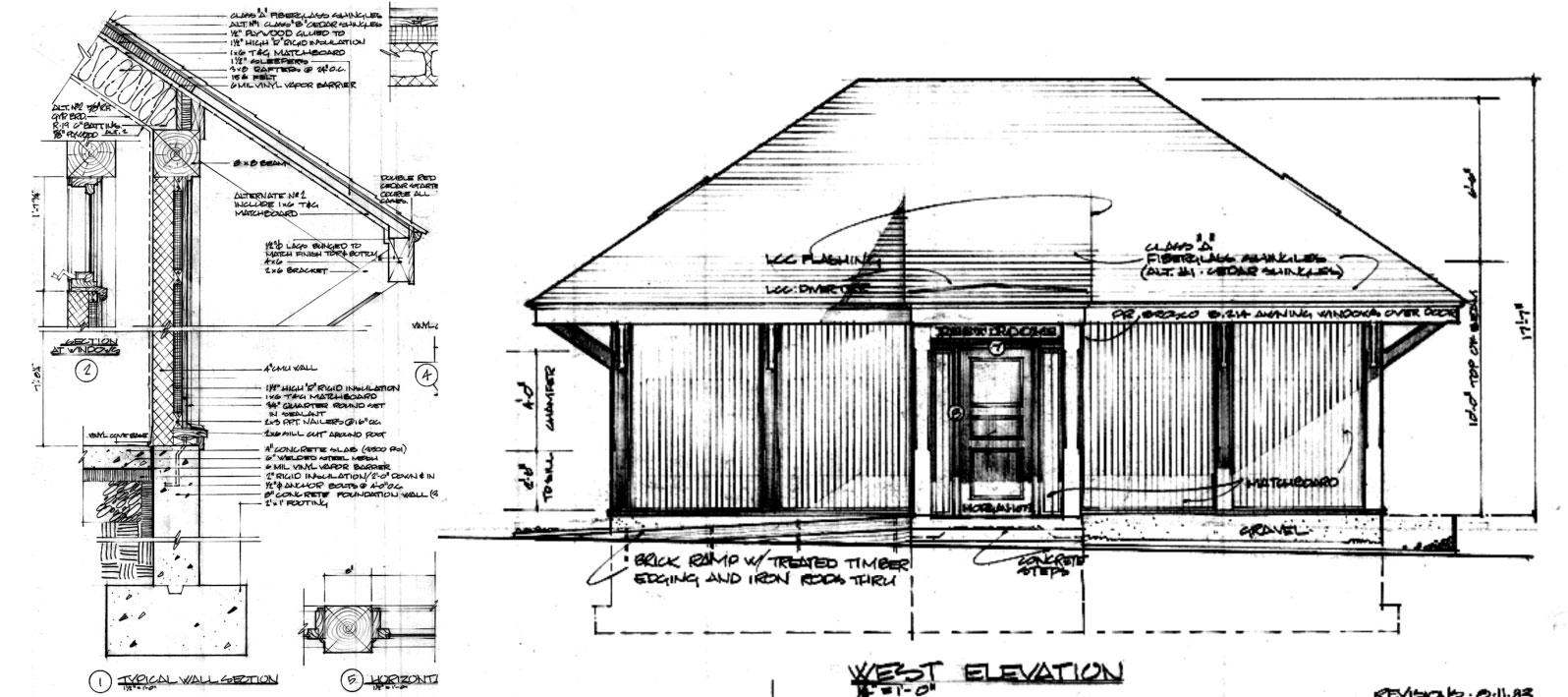
Mary Street Restrooms
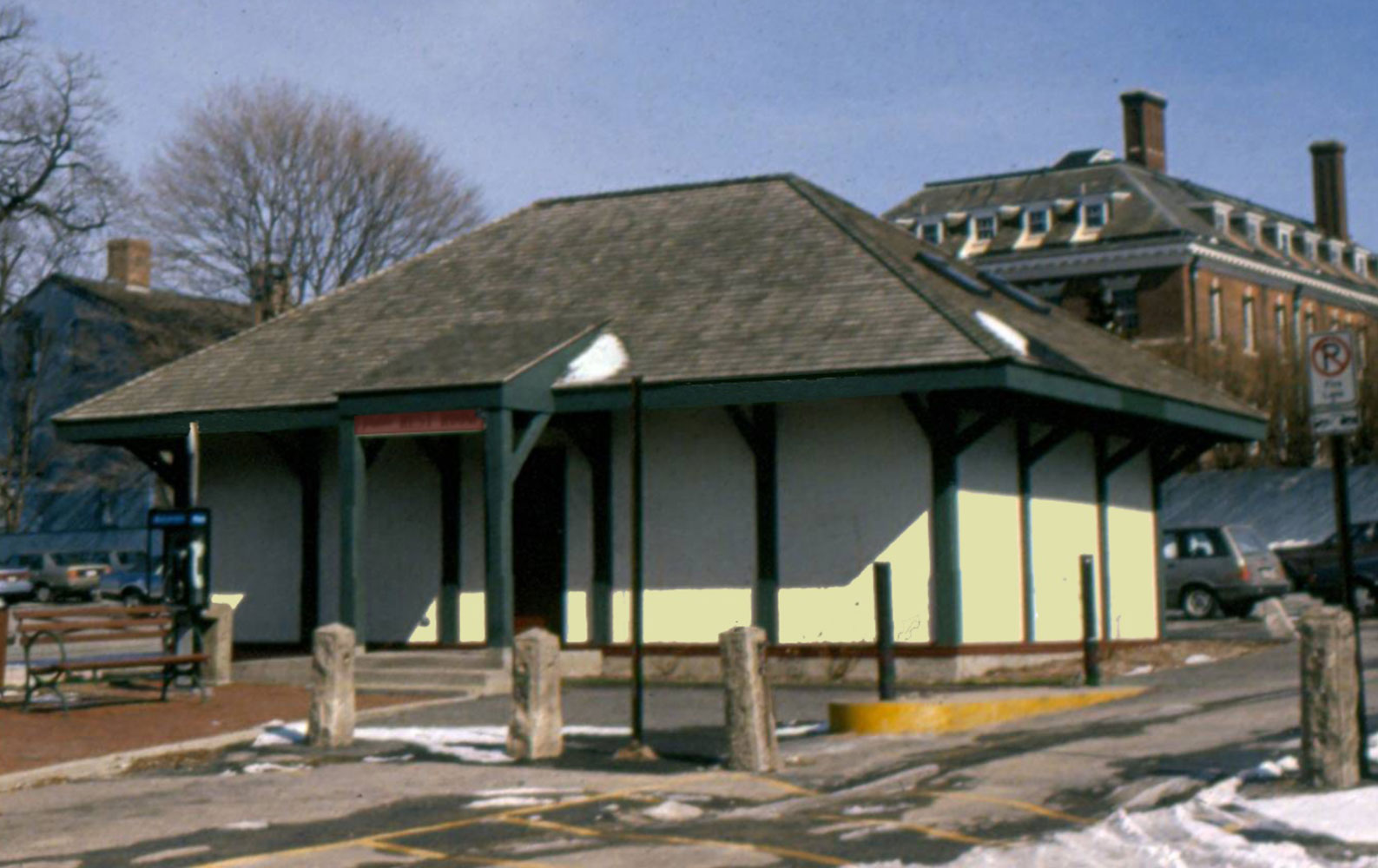
West side looking from Cotton’s Court.
Notice the site amenities like granite bollards, bench, trees,
telephone bollard and trash receptacle.
The Mary Street Restroom project came about during a hectic period while Richard (Dick) Long and I were forming a partnership for a new architectural practice in Newport that would instantly make it the largest firm in the City. It was a very important first project together.
Within a few days my new partner came to me with a newspaper clipping from the Newport Daily News and asked me if I had seen the ad in the night before’ s paper requesting proposal for a new restroom to be located in downtown Newport. I said no, but who would want to do a toilet? He said we do; it is a job. My most immediately thought was “if Lou Kahn can do a toilet I can”. So, my new partner said you do it as your good at proposals and it will have a lot of specifications if we get it. I said if we get an interview it will be because they know you. So, I wrote a proposal and we soon got a call for an interview. Both my partner and I went to the interview with my partner talking about the design qualities we could bring to the project and I talked about cost control, public bidding and overseeing the contractor’s work. I responded to the questions about the high fee (12.1%) we were asking. I said it was a very small but expensive building because of all the plumbing involved and that I would work the construction and our fees into their $80,000 budget or do it over again for free.
The first public bidding of the construction project was with labor, material and performance bond including a 5% retainage with 120-day schedule deadline. Low bid was $128,000 which was well above the construction budget of about $70,000.
For the successful rebidding all above conditions waived but a 25% retainage was required. The low bid was $67,100 and the second low bid was $96,000. Removing bonds and time constrains were the only changes made when the project was rebid. The low bid was $68,000 below the $70,320 budget. This building was very small only 640 square feet or about $106.25/square foot.
Why small buildings? Because they get built faster and I wanted to design as much of them as I could. Meaning everything, architectural, structural, mechanical, electrical – everything. That, I thought, was a master builder and is what I did on the Mary Street Rest Rooms.
The intension was to be straight forward and simple. The design concept was inspired by a similar building that was nearby at the old Government Landing. I did the plan as I knew about handicap accessibility and then went directly to a massing model to resolve the three-dimensional characteristics. The committee approved and we assigned Dave Edwards to do the working drawings while I did the specifications.
Enrichment comes from the use of high-quality materials, mostly the Douglas fir structure and the red cedar shingled roof, and the articulation of how the building goes together. Low maintenance was of consideration as well. Site selection was easy as the only place the client could arrange to have available was in the Mary Street Parking lot. To the southwest was where Cottons Court comes up into the parking lot from Thames Street, the main route into this part of the Newport Downtown. It was here I chose to locate the building as it was closest to water, sewer and electric power.
The building was completed on time and on budget.
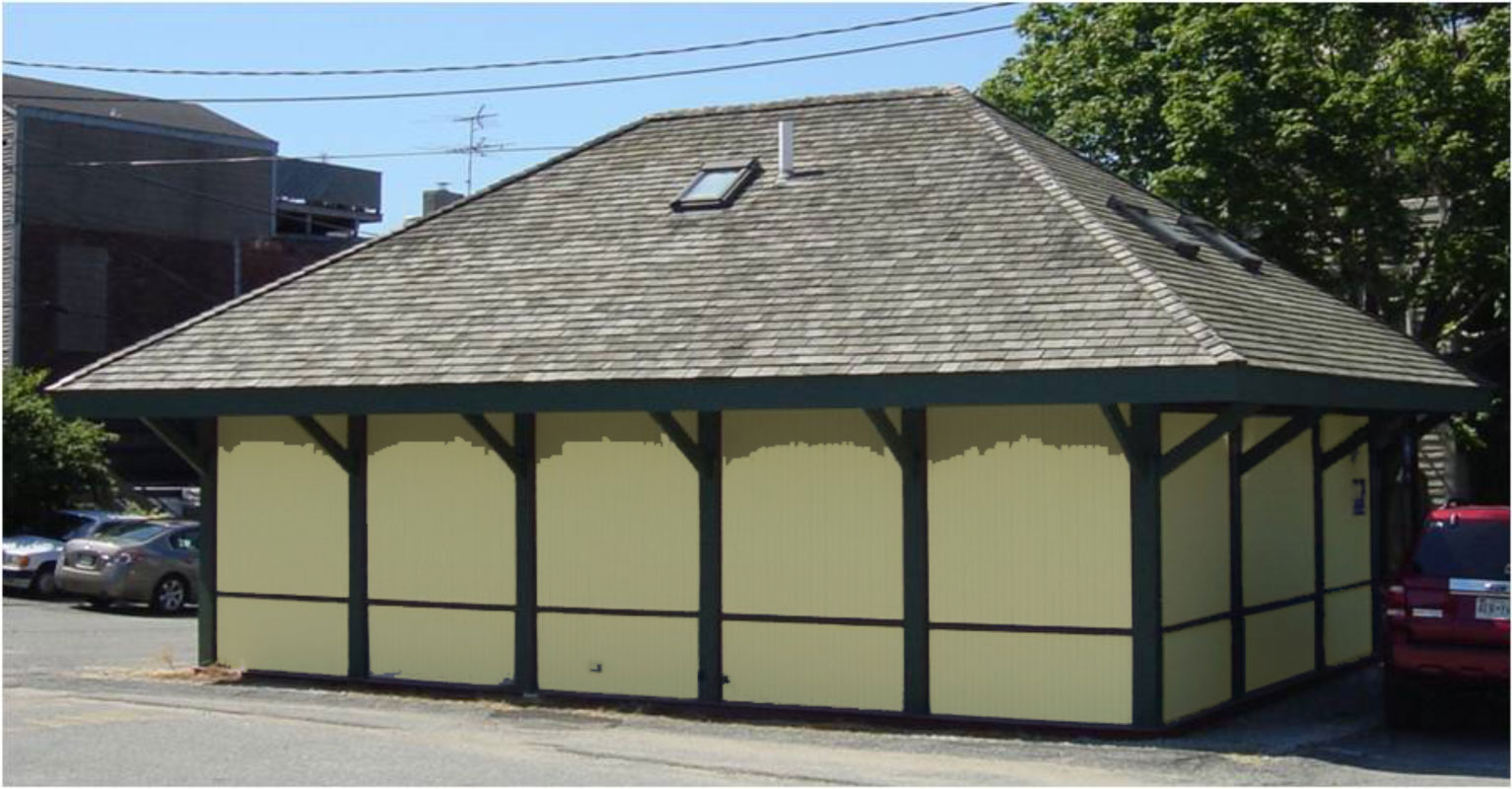
East side looking from Mary Street parking lot. Note that the roof shingles are fire retardant treated red cedar wood.
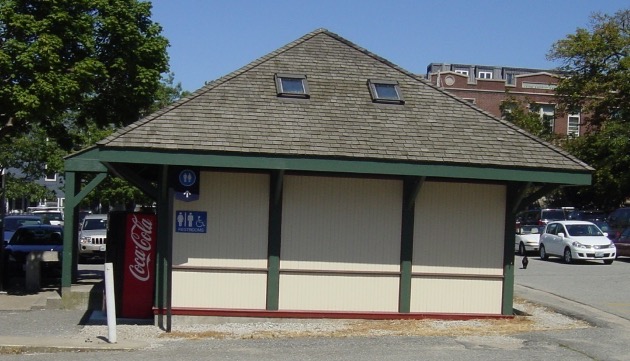
South side looking towards Mary Street.
Unfortunate soda machine and signs. If you look at the south elevation and the drawing
and details there is a hand carved sign (stolen) seen here.


A dumpster enclosure fence serving Thames Street restaurants to hide a roll-off dumpster and cut down on liter blowing around in the Mary Street parking lot. Designed for free for a businessman client and friend.
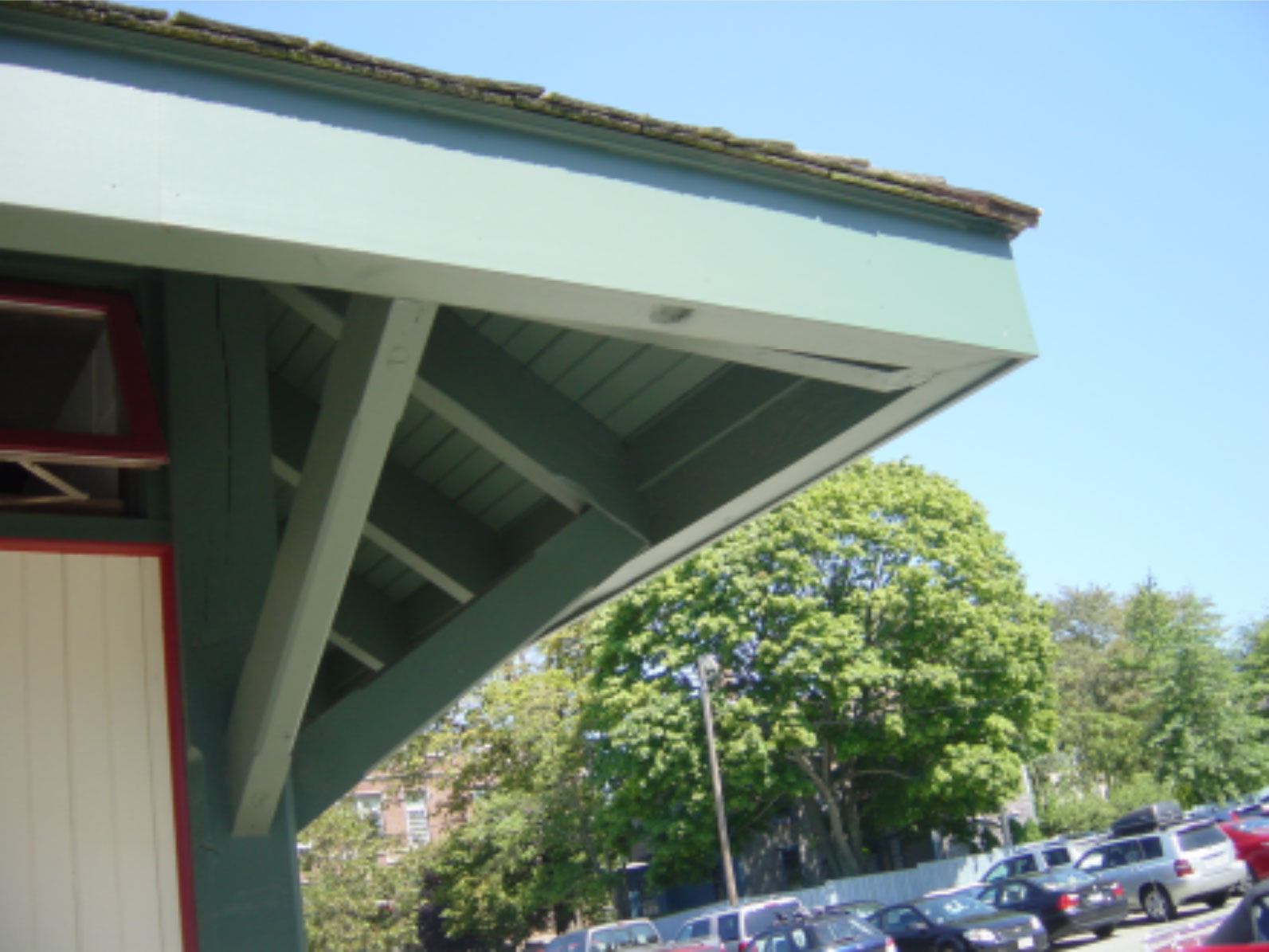

Construction photo early-summer 1983 by Ray Fisher, Master Carpenter and Carpentry Instructor at the Newport Area Career and Technical Center. Heavy timber framing is all clear No.1 Douglas fir.


A cardboard study model of the rest room design. (Construction and photography by J.L. Staats)

Drawing by Richard R. Long, based on the design model for the Newport Daily News April 15, 1983