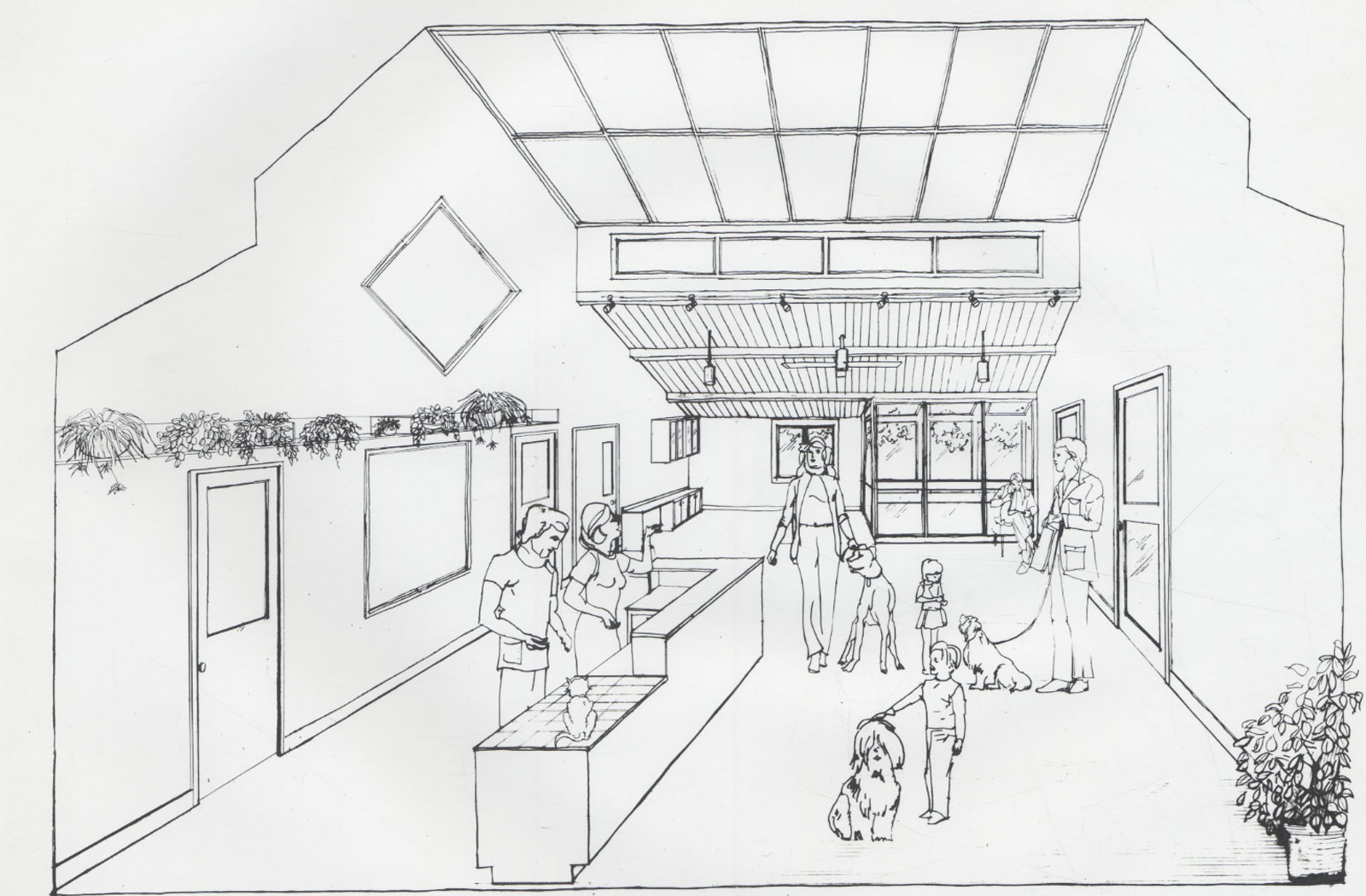
Potter League for Animals (Lighting)

The Robert Potter League for Animals set out upon
a fund raising and expansion effort that led to a move from its small, overburdened facility to a piece of leased state-owned
land. The site at the state airport in Middletown is a small
island in a wetland connected to a main road by a land bridge.
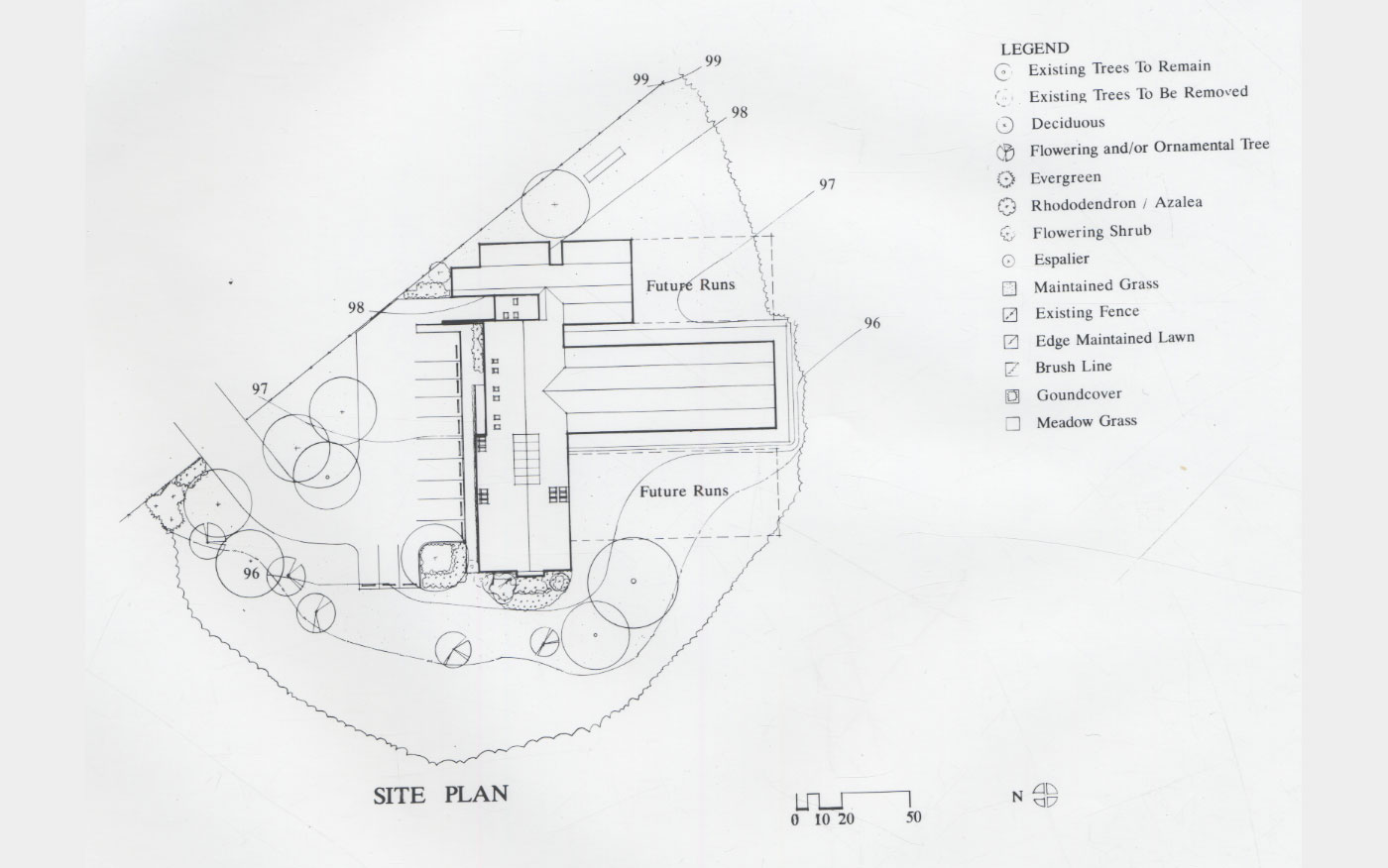
The Architect was asked to design a facility that could be expanded by
phases to meet needs into the 21st century. The master plan of the entire facility showed the completed building of
about 16,700 gsf to house 124 dog and 72 cat runs, service, administrative and educational areas.
The design itself is organized to conform to the shape of the "dry" island of land available and the programmatic
need to separate the dog runs from the rest of the facility for acoustical reasons. The staff service conidor allows the functions of the facility and the day to day
routines to occur without interfering with the educational and administrative functions.
The center of the scheme, where the administrative, educational, service personnel and public come together,
connects to the service corridor and a small corridor that leads to the multi-purpose room, which has its own separate entrance to
accommodate the busloads of school children that come to the facility for the educational programs. A large bay
window here allows views over the wetland and of local wildlife.
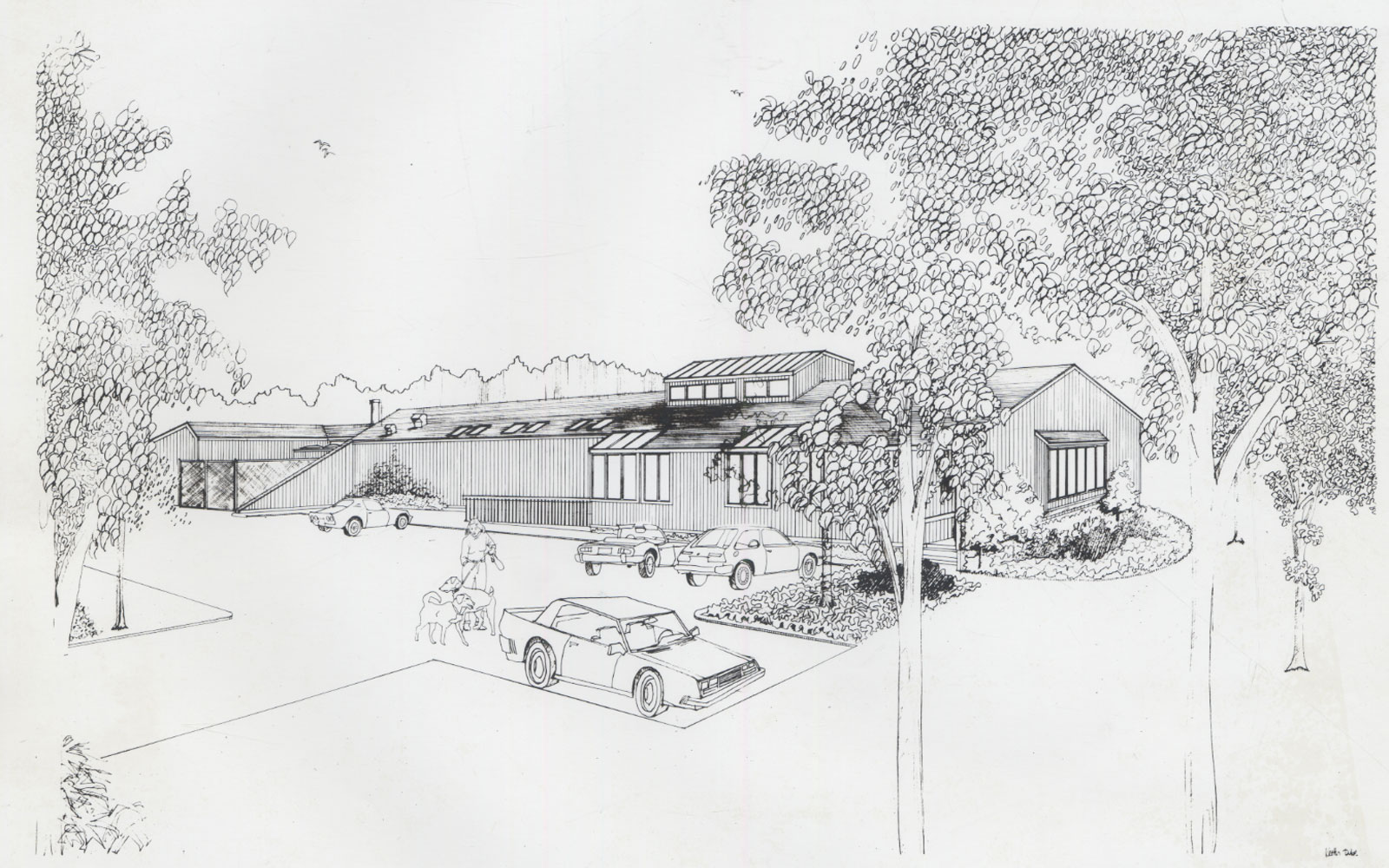
The architectural expression is inspired by the low one story dairy farm milking barn structures particular to
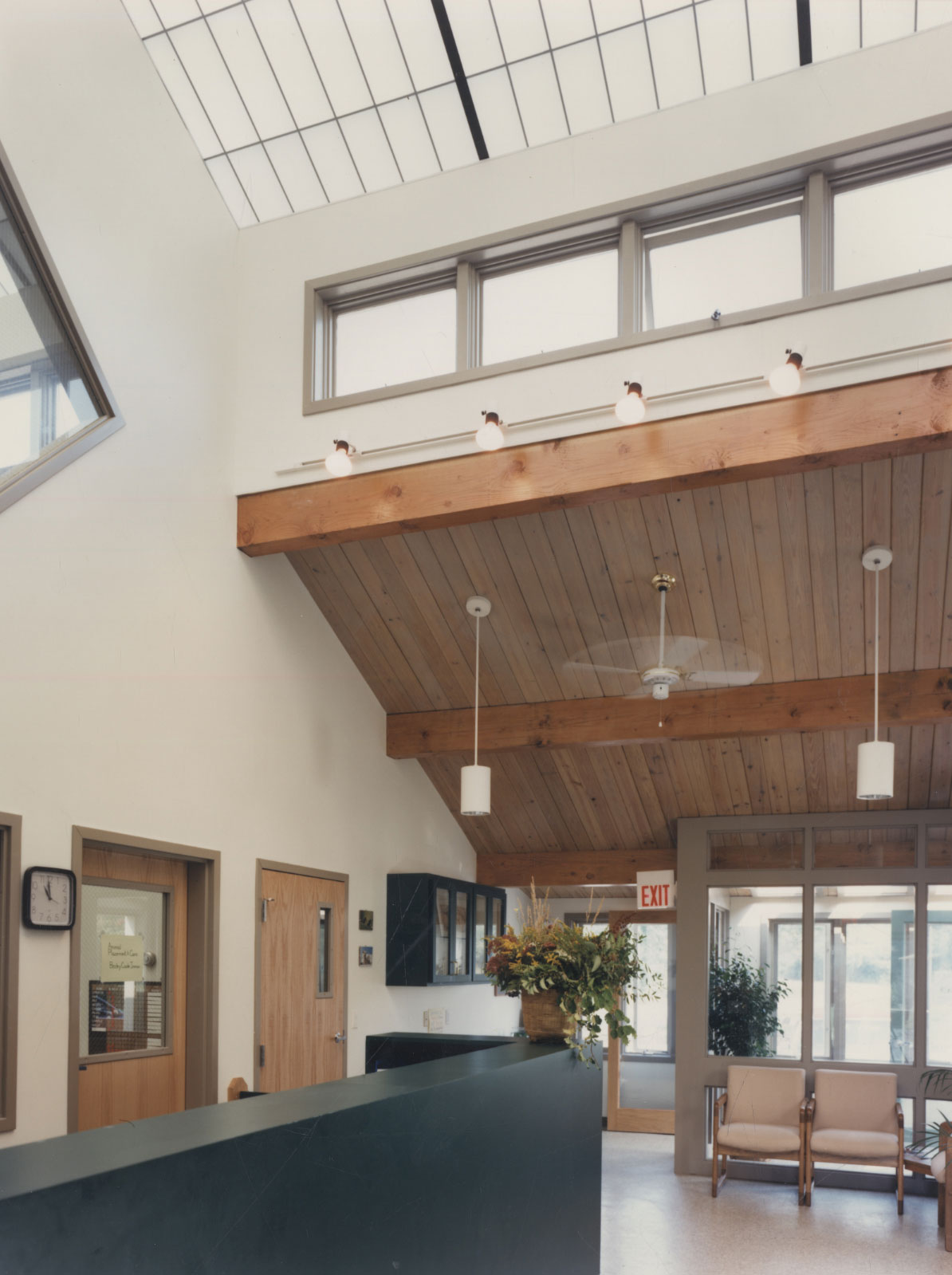
the area. The central roof monitor is used here to promote natural ventilation just as in the old barns. Skylights in
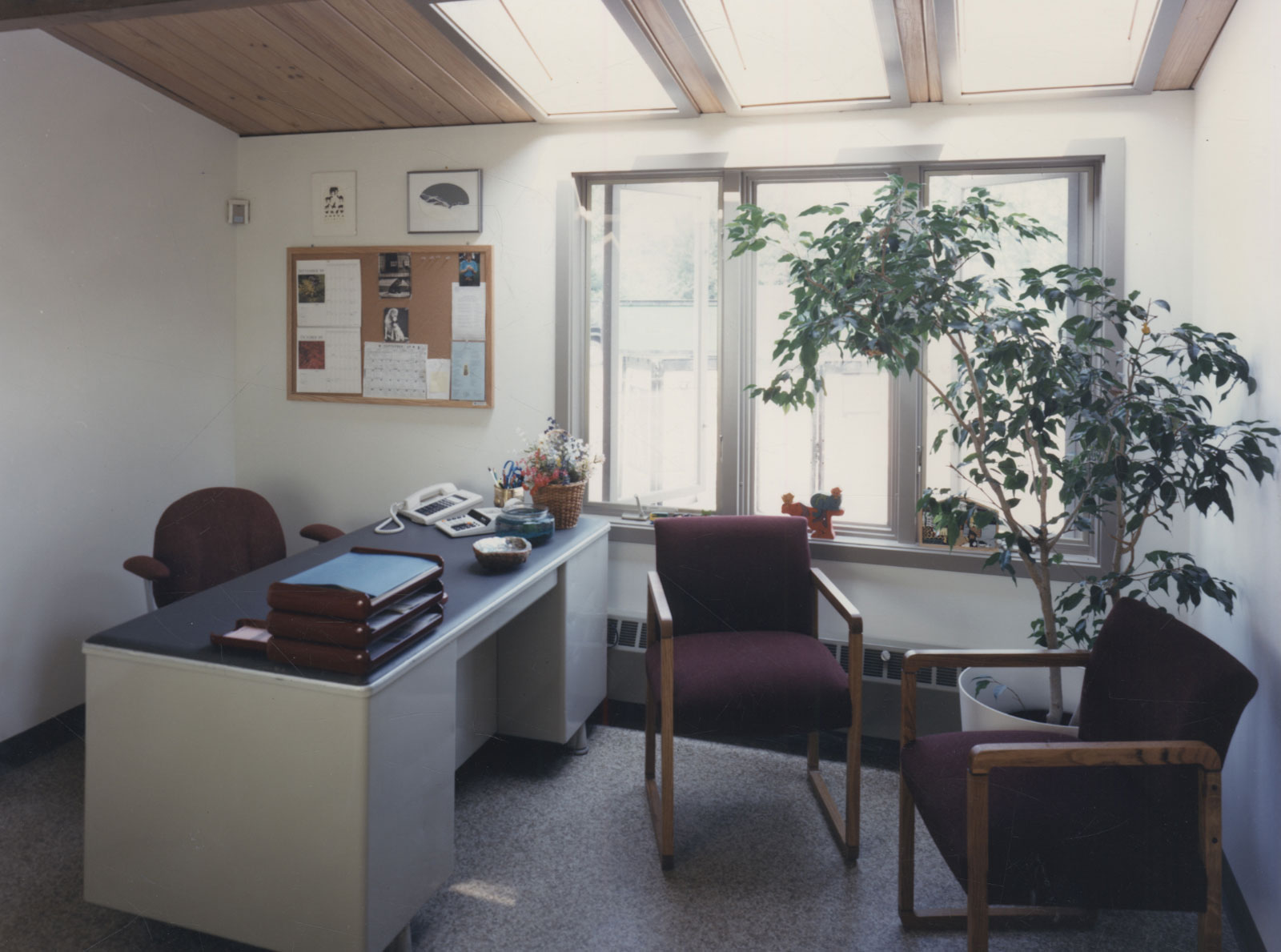
combination with windows are used throughout the building to avoid expensive air conditioning. This roof monitor
also serves the function of bringing quality daylight to the interior of the public and administrative areas. Using an
insulated translucent roofing material with a 20% transmission allows an even and constant level of illumination
from the sunny to the many cloudy days of this region.